Pages

Tuesday, June 27, 2006

Famous people with dyslexia?

"I have problems with words over six letters long. School days were the worst days of my life." Noel Gallagher


People with dyslexia often have rare talents. They can have great ideas and be able to solve problems in new ways by being very creative. This is called 'lateral thinking'.

Famous people who have said they have dyslexia include:
Robbie Williams
Scott from Five
Michael Barrymore
Noel Gallagher
Muhammad Ali
Tom Cruise
Anthea Turner
Guy Ritchie
Richard Branson
Steve Redgrave
Albert Einstein
Princess Beatrice
Jamie Oliver
Orlando Bloom
Keira Knightley

They are all famous people who have said they have dyslexia, or had a lot of difficulty with reading and writing at school.
Source: CBBC

Tuesday, June 20, 2006

Ancient Stigma Removed

Cross-cultural comparisons can be valuable tests of the broad applicability of certain observations. Accordingly, some researchers had felt the need to identify examples of highly respected individuals from non-Western cultures who would fit the larger patterns of high ability with some form of dyslexia or other related learning problems. It is difficult enough to discuss things that are perceived a spossible defects in Western cultures--especially among men who learnearly the possible cost of showing any sign of a weakness that might be exploited by others. As difficult as these discussions are inWestern groups, they are often much more difficult in Asian and Middle Eastern groups. Foreign students who are tested for dyslexia and learning disabilities in American universities, for example, seem to have an unusually difficult time getting past their own personal denial. Apparently, they perceive a social stigma that seems to bemuch greater than that experienced by many Westerners.

Accordingly, it is some import that a series of newspaper articles in Hong Kong and Singapore had announced early in 1996, in no uncertain terms, that Lee Kuan Yew--perhaps the most respected senior statesman through out all of Asia-- had revealed that he had "mild dyslexia." According to an account in a Hong Kong newspaper, "Singapore's elder statesman Lee Kuan Yew, known as an intellectual heavyweight in world political circles, has revealed he suffers from mild dyslexia. . . .The 72-year-old former premier and Cambridge-educated lawyer said he was tested by a British expert . . . 10 years ago at the suggestion of his neurologist daughter Lee Wei Ling, who has the same problem. . . .' I am pretty proud of him, all considered, ' [Dr. Lee] said of her iron-willed father who, as premier for more than three decades, transformed Singapore from a British colonial port into an Asian economic power." The reason for the testing was, as the elder Lee explained, "I had complained that I could not read fast without missing important items." Lee's daughter had learned of her own dyslexia as part of her medical training in Boston and realized that her father seemed to have similar problems (Agence France Press, Yeo).

These revelations were made as part of an announcement that royaltiesfor a new CD-ROM of Lee Kuan Yew's life would be donated to theDyslexia Association of Singapore. The association chairman noted that "now that S[enior] M[inister] Lee has admitted to having dyslexia, the stigma is removed and parents will no longer think that it is something to be ashamed about." Lee's daughter serves as a consultant to the Singapore dyslexia organization (Hussin). Lee Kuan Yew's personal revelation may also make us wonder at possible connections between his dyslexia and his visionary and long-standing political leadership.

Source: LD Online

Misunderstood Video

A documentary about dyslexia by Sonia, Sofia and Nadia

that was GHS Best Media Studies Production 2005

Source: Macguffin You Tube

Any questions? 'Satisfactory' reports

John Clare comments on Ofsted reports, dyslexia and drawing classes

What exactly does Ofsted mean by "satisfactory": good enough or not good enough?

Bizarrely, it could be either - or even both. Take, for example, this Alice in Wonderland sentence from Ofsted's recent report on Toynbee School in Eastleigh, Hants: "There is too much satisfactory teaching, which has resulted in students making satisfactory progress overall." The curriculum, the report adds, is "satisfactory" as are achievement and standards and leadership and management; the school also offers "satisfactory" value for money. In which sense (if any), though, it is impossible to tell. Not even Ofsted can make words mean what it wants them to.

My nine-year-old grandson is bright and well-behaved but can't read and write properly. He struggles with all his subjects except art and design and is bottom of his class. His teacher has told his mother that she must accept this is how it will always be because there's a limit to how much help the school can give. What should we do?

I think your grandson has a specific learning difficulty - "specific" rather than general because he is intelligent, not learning disabled. My guess is that the difficulty is dyslexia and that it is probably quite severe. That the school has not identified it or taken steps to remedy it is a scandal - as is his teacher's fatalism. His mother's first task is to have him independently tested, either by the British Dyslexia Association (
www.bdadyslexia.org.uk) or the Dyslexia Institute (www.dyslexia-inst.org.uk).

If his condition is severe, she should apply for an official statement of his special educational needs (see www.ipsea.org.uk) specifying which school specialising in dyslexia (see www.crested.org.uk) he should attend and what proportion of the cost should be borne by the local authority. If his condition is not severe, either the BDA or the Dyslexia Institute will advise on the best way to deal with it. If dyslexia is not the principal problem, your grandson needs to be seen by an independent educational psychologist. The British Psychological Society (www.bps.org.uk) keeps a register of them. Above all, he should not be left in limbo any longer.

Please would you tell your readers about the courses in drawing, painting and etching that we at the Prince's Drawing School will be running again this summer? It's an opportunity for GCSE and A-level art students to develop their skills and portfolio of work. All our tutors are distinguished artists.

The summer school, which emphasises a traditional approach to art teaching, has proved a big hit with readers. This year's courses include "Painting a clothed figure", "Drawing at London Zoo" and, for pupils aged 13 and upwards, "Thinking about art school?" They run from July 3 to Aug 18 in a converted warehouse in Shoreditch, east London. A one-week course costs £200; a small number of bursaries are available. See www.princesdrawingschool.org or phone 020 7613 8500.

Source: The Telegraph

Also see: Any questions? Dyslexia, student loans and grade predictions

Monday, June 19, 2006

Seeing What Others Don't See

Pictured Above Jack Horner

An example of a highly talented and innovative dyslexic working in science instead of business is John R. (Jack) Horner. Well known to young enthusiasts of dinosaur films and to professional paleontologists, Jack Horner was written up in the "Scholarship" section of the Chronicle of Higher Education, the trade tabeloid newspaper for university professors. The article seems an odd, perhaps self-spoofing choice for the Chronicle, since Jack Horner is about as far from the traditional scholar as anyone can imagine. It is true that he has an honorary doctorate and now supervises 12 Ph.D.candidates. But Horner never completed an undergraduate degree nor, indeed, any graduate work--having flunked out of the University of Montana six times. Yet, in spite of this, as the Chronical article explains, after he had established himself, "his brilliant synthesis of evidence . . . forced paleontologists to revise their ideas about dinosaur behavior, physiology, andevolution" (McDonald).

Horner never earned an undergraduate degree because he failed "justabout all his science courses, and never [completed] his undergraduatework." Although he had great difficulty with his college work, it is clear that at a deeper level he was continuously absorbing the knowledge needed to revolutionize a field. As Horner tells the story, his difficult beginnings helped him to be a risk taker. " Back in the days when I was growing up, nobody knew what dyslexia was. . . . So everybody thought you were lazy or stupid or both. And I didn't think I was, but I wasn't sure. I had a lot of drive, and if somebody told me I was stupid, that usually helped--it really helped me take a lot more risks. For someone that everybody thinks is going to grow up to pump gas, you can take all the risks you want. Because if you fail, it doesn't matter.' "

But the risks paid off. According to the curator of the museum of vertebrate paleontology at the University of California at Berkeley: "A lot of people have tended to underestimate Jack because he hasn'tcome through the traditional academic route. But he is, without question, one of the two or three most important people in the world today studying dinosaurs. " Horner is able to see things differently and he observes things others do not see. For example, he believes that it is really of little interest to find the fossil bones of avery large adult dinosaur. What he is interested in finding are fossils of many dinosaurs of many sizes, in their environment, in order to understand the life of the animals and the way they interacted with other animals in that environment. Horner is known not only for his markedly different way of looking at things, but also his unusual ability to see, in the field, the tiny fossil bones of baby dinosaurs that other experts cannot find. According to another researcher: "He has a gift. . . . He can see things the rest of us don't see. "Horner is especially worth noting because, in spite of his persistent academic failures, he came eventually to be acknowledged as one who has transformed some of the fundamental thinking in his field. History forces us to reconsider in a deep fashion what is really important in one's work and what is not. Horner proved to have extraordinary difficulties with things that are largely peripheral to his discipline--reading, composition, test taking. However, he also proved to be unusually gifted in those things that lie at the heart of his discipline--being unusually observant while searching for fossil bones in the field, being able to interpret the surprising patterns that emerge from the evidence, thinking his way beyond and around his associates, developing innovative and persuasive arguments based onlooking at the raw data in a very different way.

Source: LD Online

Thursday, June 15, 2006

The MIT Disease--Nicholas Negroponte


Nicholas is founder and chairman of the One Laptop per Child non-profit association. He is currently on leave from MIT, where he was co-founder and director of the MIT Media Laboratory, and the Jerome B. Wiesner Professor of Media Technology. A graduate of MIT, Nicholas was a pioneer in the field of computer-aided design, and has been a member of the MIT faculty since 1966. Conceived in 1980, the Media Laboratory opened its doors in 1985. 

He is also author of the 1995 best seller, Being Digital, which has been translated into more than 40 languages. In the private sector, Nicholas serves on the board of directors for Motorola, Inc. and as general partner in a venture capital firm specializing in digital technologies for information and entertainment. He has provided start-up funds for more than 40 companies, including Wired magazine.

The varied talent mix seen in many dyslexics seems to be especially well recognized in the world of computers as well as entrepreneurial business. Both are areas where performance is measured by demonstrating working systems (rather than writing reports) and where anticipating technological trends is more highly valued than traditional academic skills and paper credentials. One of the leading visionary thinkers in the computer field is Nicholas Negroponte, the dyslexic founder of the Media Lab at the Massachusetts Institute ofTechnology (MIT). More than a decade ago, he and others started work to form the Media Lab which was to be based on the idea that major industries--such as publishing, telecommunications, television, feature film, and computers--would all converge over time until at acertain point it would be hard to tell which was which. Of course, nowthese predictions are seen as splendidly and universally justified, aswe are daily confronted by the reality of these expectations.

In 1995, Negroponte published Being Digital, a book of essays--based on a series of columns in the magazine Wired--about the varied longer-term effects of the computer revolution. Since the book is so explicitly focused on computers, it is quite remarkable that the first and last sentences of his "Introduction: The Paradox of a Book" refer not to computers at all--but instead to his own dyslexia and his difficulties with reading. The book begins: "Being Dyslexic, I don't like to read books." And pages later: "So why [have I written] an old-fashioned book . . . especially one without a single illustration?" He gives several reasons. Among these are the advantages inherent in the vagueness of words. When you read, he notes, more is left to the imagination and more is drawn from your own personal experience. In contrast, he observes that "like a Hollywood film, multimedia narrative" provides such detailed and realistic representations of things that "less and less is left to the mind'seye." Consequently, finishing his introduction, he says: "You are expected to read yourself into this book. And I say that as someone who does not like to read" (Negroponte).

Thus, Negroponte provides a remarkable example of one of the leading and most prescient communicators of the digital revolution referring in his book repeatedly to his own reading problems. It is also notable that on radio programs during his book tour for Being Digital, Negroponte commented that links between dyslexia and high talent are often observed at MIT-- indeed, these observations are so frequent that locally dyslexia is called "the MIT disease.

"Some months after his book came out, Negroponte was featured on the cover of Wired magazine to celebrate the first ten years of the MediaLab. Playing on the title of Negroponte's book, the Wired article begins: "Being Nicholas--The Media Lab's visionary founder . . . is the most wired man we know (and that is saying something)." During the interview, Negroponte is asked whether he would rather read text on a computer screen or on paper. His answer reveals the matter-of-fact, by-the-way, manner many successful dyslexics have come to speak of their difficulties: "I don't read long articles period. I don't like to read. I am dyslexic and I find it hard. When people send me long [electronic-mail] messages, I ignore them. The only print medium I read every day is the front page of the Wall Street Journal, which I scan for news of the companies I am interested in. All the rest of my reading is on screens, and often not very good screens, because I travel so much.

One Laptop Per Child system - first working prototype Video

Wednesday, June 14, 2006

AVKO Video: To Teach A Dyslexic Part 4


Click the Play button in the center of the screen to Watch

AVKO Video: To Teach A Dyslexic Part 3


Click the Play button in the center of the screen to Watch

AVKO Video: To Teach A Dyslexic Part 2

Click the Play button in the center of the screen to Watch

AVKO Video: To Teach A Dyslexic Part 1

Click the Play button in the center of the screen to Watch

Big Thanks to Don McCabe for his Ground breaking books and work with Dyslexic People, also all at AVOK

AVKO comes from Audio, Visual, Kinesthetic, & Oral a multi-sensory approach.

Don McCabe, is Research Director at AVKO Educational Research Foundation, and has written over forty books.

Watch Don McCabe as he takes a 17-year-old dyslexic through his first lesson at the AVKO Dyslexia Research Foundation. You will be able to watch the young man's face as he discovers that Mr. McCabe has "tricked him" into being able to read and spell instantly the word malicious!

But it's not trickery. It's based on solid educational principles. McCabe, a dyslexic himself, has discovered that it is the ends of "big" words that determine how the beginnings are pronounced and that it is the endings of words that often use different, albeit consistent, phonic patterns. Isn't that nice. But notice, notice is not not ice!

Source: AVOK

Monday, June 12, 2006

Adults With Dyslexia Can Improve With Phonics-based Instruction, Research Shows


New research shows that phonics-based instruction can actually change brain activity in adults with dyslexia, resulting in significant improvements in reading. The findings from a collaborative study by Wake Forest University Baptist Medical Center and Georgetown University Medical Center were reported today in the journal Neuron.

"With about 112 hours of phonic-based instruction, adults with dyslexia had significant improvements in reading and changes in brain activity while reading," said Lynn Flowers, Ph.D., senior researcher, from Wake Forest Baptist. "We know that dyslexia is not something children outgrow, and our findings suggest that it's never too late for instruction to overcome this disability."

This was the first independent research study of whether phonics-based instruction is effective in adults with dyslexia and the first to measure whether the instruction would result in changes in brain activation. Dyslexia, or difficulty learning to read, has been associated with underactivity in areas of the brain that process language and "decode" words into groups of letters that are associated with meaningful sound patterns.

The research involved 19 adults with dyslexia and 19 typical readers without dyslexia. The mean age of participants, who were mostly from the Winston-Salem area, was 42.5.
Dyslexia is the most common learning disability and affects about 10 percent of the population. "A huge number of adults have this problem, so it's important to know whether something can be done to treat it," said Flowers, an assistant professor of neurology. "Adults with dyslexia can suffer significant financial and emotional consequences."


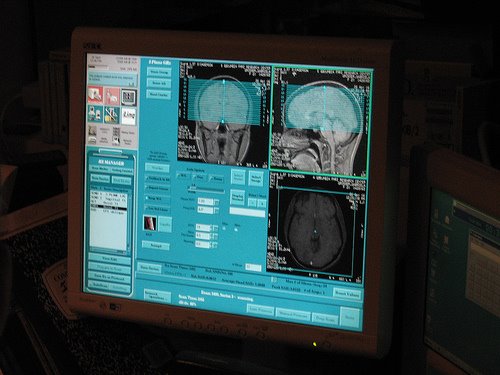
The researchers used functional magnetic resonance imaging (fMRI) -- which shows brain activation during a task -- to verify whether adults with dyslexia process language differently from typical readers. The testing -- performed while participants completed a phonics task -- showed that several areas of the brain, predominantly on the left side, were less active in participants with dyslexia. These areas are associated with processing phonetic sounds and recognizing familiar objects.

"This verified our findings and those of others and confirms that dyslexia is biologically based," said Flowers.

The researchers then tested to see if instruction in phonics would improve reading ability and produce changes in brain activation. Half of the participants with dyslexia received phonics-based instruction 15 hours a week for eight weeks. Before the instruction began, they completed pen-and-paper tests to measure their reading ability and underwent fMRI. After the instruction, they completed a second round of written and fMRI testing.

The written tests showed that participants who received instruction made gains of between six and 23 percent in text reading, phonetic awareness and the ability to "decode" the written word. fMRI testing revealed that the improvements in reading corresponded to increased activity in areas of the brain associated with phonetic processing, being able to associate a symbol with a sound and being able to recognize whether a string of letters represents a word.

Flowers said the gains in reading ability were significant enough to make a difference in the everyday lives of participants.

"One woman who had never read a book now sets her alarm clock early to get up and read before going to work," she said.

Flowers said phonics-based instruction was chosen for the research because it has proven successful in children. She said the researchers are currently working to see if a less intensive program will have the same benefits.

She recommends that adult dyslexics who want to get reading instruction select a phonics-based program that focuses on the structure of language and how language works. It should also involve multiple senses, including how a letter looks, sounds and feels.

Flowers' co-authors were Guinevere Eden, D. Phil., Karen Jones, Katherine Cappell, Lynn Gareau, Thomas Zeffiro, M.D., Ph.D., Nichole Dietz, Ph.D, and John Agnew, Ph.D., from Georgetown, and Frank B. Wood, Ph.D., from Wake Forest Baptist.

Source: Wake Forest University Baptist Medical Center

Novel Discovery of “DCDC2” Gene Associated With Dyslexia


Pediatric researchers at Yale School of Medicine have identified a gene on human chromosome 6 called DCDC2, which is linked to dyslexia, a reading disability affecting millions of children and adults.

The researchers also found that a genetic alteration in DCDC2 leads to a disruption in the formation of brain circuits that make it possible to read. This genetic alteration is transmitted within families.

“These promising results now have the potential to lead to improved diagnostic methods to identify dyslexia and deepens understanding of how the reading process works on a molecular level,” said lead author Jeffrey R. Gruen, M.D., associate professor in the Pediatrics Department at Yale School of Medicine.

The study will be published in a special issue of Proceedings of the National Academy of Sciences on October 28. Gruen and first author Haiying Meng will also present the findings that same day at the American Society of Human Genetics (ASHG) meeting in Salt Lake City, Utah.

Gruen and co-authors used a statistical approach to study and compare specific DNA markers in 153 dyslexic families. “We now have strong statistical evidence that a large number of dyslexic cases—perhaps as many as 20 percent—are due to the DCDC2 gene,” said Gruen. “The genetic alteration on this chromosome is a large deletion of a regulatory region. The gene itself is expressed in reading centers of the brain where it modulates migration of neurons. This very architecture of the brain circuitry is necessary for normal reading.”

To facilitate reading, brain circuits need to communicate with each other. In reading disabilities, these circuits are disrupted. In people with dyslexia, compensatory brain circuits are inefficient and they have a hard time learning to read.

Locating this gene provided researchers with part of the reason why dyslexia occurs. Gruen said discovery of the gene and its function will lead to early and more accurate diagnoses and more effective educational programs to address the unique needs and special talents of people with dyslexia.

“We can’t continue the cookie cutter, one-size-fits-all schooling anymore,” said Gruen. “People with dyslexia are not less intelligent than others, they just learn in different ways. Tailoring programs to fit the needs of these children will enhance their success in school and be more cost effective.”

Other authors on the study were Shelley D. Smith, Karl Hager, Matthew Held, Jonathan Liu, Richard K. Olson, Bruce F. Pennington, John C. DeFries, Joel Gelernter, Thomas O’Reilly-Pol, Stefan Somlo, Pawel Skudlarski, Sally E. Shaywitz, Bennett A. Shaywitz, Karen Marchione, Yu Wang, Murugan Parmasivam, Joseph J. LoTurco and Grier P. Page.

The study was funded by the National Institute of Neurological Disorders and Stroke.

This technology is available for license. Interested parties may contact Yale Office of Cooperative Research at 203-785-3074.


Source: Yale University

Dyslexia: risk gene is identified


About five million Germans have serious learning difficulties when it comes to reading and writing. It is frequently the case that several members of the same family are affected. So hereditary disposition seems to play an important role in the occurrence of dyslexia. Scientists at the universities of Marburg, Würzburg and Bonn have been working on this question together with Swedish colleagues from the Karolinska Institute in Stockholm. In examinations of German children with serious reading and writing difficulties they have now succeeded in demonstrating for the first time the contribution of a specific gene. Precisely how it contributes to the disorder remains unclear. It is thought that the genes may affect the migration of nerve cells in the brain as it evolves. The results will be published in the January edition of the American Journal of Human Genetics, but have already been made available online (http://www.journals.uchicago.edu/AJHG).

For several years child and youth psychologists at the universities of Marburg and Würzburg searched for families in which at least one child was considered dyslexic. "We then analysed blood samples taken from the families to identify candidate genes – and in the end we found the right one," explains the scientist who headed this part of the study from Marburg, Privatdozent Dr. Gerd Schulte-Körne.

The gene is located in the region of Chromosome 6, which had already been indicated by scientists from the USA and England in connection with reading and spelling disabilities. But the German-Swedish team has gone further and identified within this region a single gene which, as found among German children, is apparently an important factor in the emergence of dyslexia. "Known as the DCDC2 gene, it appears to affect the migration of nerve cells in the developing brain," says Professor Dr. Markus Nöthen from the Life and Brain Centre at Bonn University. Professor Nöthen and his team are in charge of the molecular work within the project.

Changes in the DCDC2 gene were frequently found among dyslexics. The altered gene variant often occurred among children with reading and writing difficulties. The gene appears to have a strong linkage with the processing of speech information when writing. The researchers now want to gain a better understanding of DCDC2 and discover in detail why children with this altered gene have a higher risk of dyslexia.

On the German side the project is funded by the German Research Foundation (Deutsche Forschungsgemeinschaft) and the Alfried Krupp von Bohlen and Halbach Foundation. The research group at the Karolinska Institute is supported by the Swedish Research Council, the Academy of Finland, the Sigrid Jusélius Foundation, and the Päivikki and Sakari Sohlberg Foundation. Professor Nöthen occupies the Alfried Krupp von Bohlen and Halbach Chair for Genetic Medicine. The Life & Brain Centre is a new research facility at the Bonn University Clinic which uses state-of-the-art technologies to conduct application-oriented aetiology.

About five per cent of all Germans are dyslexic. Despite good intelligence levels and regular school attendance they have great difficulties in reading texts and expressing themselves in writing. For many children the nature of their reading and spelling disability is not recognised until it is too late, i.e. when they are having psychological problems due to their learning difficulties. They can develop school-related anxieties and depression, even with thoughts of suicide.

Source:
University of Bonn

Brain images show individual dyslexic children respond to spelling treatment


Brain images of children with dyslexia taken before they received spelling instruction show that they have different patterns of neural activity than do good spellers when doing language tasks related to spelling. But after specialized treatment emphasizing the letters in words, they showed similar patterns of brain activity. These findings are important because they show the human brain can change and normalize in response to spelling instruction, even in dyslexia, the most common learning disability.

The research is unique in that it looks at images of individual brains rather than the composite group images, or maps, that are typically produced to show which areas of the brain are activated when people are engaged in specific tasks. Being able to study how individual brains differ between good and poor spellers and how they normalize after receiving one of two treatments is an important advance, according to University of Washington neuroimaging scientist Todd Richards and neuropsychologist Virginia Berninger, who headed the research team.

The new findings were published in the January issue of the journal Neurolinguistics.

"Most people think dyslexia is a reading disorder, but it is also a spelling and writing problem," said Berninger, who directs the UW's Learning Disabilities Center. "Our results show that all dyslexics in the 9- to 12-year-old range have spelling problems and children who cannot spell cannot express their ideas in writing."

Earlier research by the UW team and others has shown that dyslexic children exhibit a different pattern of brain activity while reading compared to youngsters who are good readers, but that the brain is malleable and this pattern can normalize with specialized instruction. However, even after receiving reading instruction, many dyslexic children still have persistent spelling problems, according to Berninger. Even so, she said, parents report that their children with dyslexia are typically dismissed from special education once they learn to read but before their spelling and writing problems are adequately treated.

Researchers have found that humans code words in three forms while learning how to read and spell. These codes draw on common and unique brain circuits. The brain codes words by their sound (or phonology), by the parts of words that signal meaning and grammar (morphology), and by their visual or written form (orthography).

In the new study, researchers used functional magnetic resonance imaging, or fMRI, to examine the brain activity of 18 dyslexic children (5 girls and 13 boys) who had problems with spelling and 21 children (8 girls and 13 boys) who were good readers and spellers. All of the children were of normal intelligence and were in the fourth through sixth grades.

Both groups of children had their brains scanned twice while doing a series of language tasks. The good spellers were scanned to provide a picture of normal brain activity while doing the tasks. The brains of the dyslexic children were imaged both before and after receiving 14 hours of one of two kinds of specialized spelling instruction over a three-week period. The dyslexic children were randomly assigned to either of two spelling treatments. One emphasized the letters in the written forms of words while the other focused on the parts of words that signal meaning and grammar.

Earlier research has shown that spelling development progresses through three stages – phonological, orthographic and morphological. The treatment that was developmentally appropriate for children in grades four through six – orthographic – was the one associated with normalization of brain activation. After receiving the orthographic instruction that emphasized strategies for focusing on and remembering the letters in written words, the brain activity of the dyslexic children changed to more closely resemble that of the good spellers. The children's spelling on a standardized test also improved. Dyslexic children who received the other treatment, a morphological one that was more developmentally advanced, did not show normalized brain activation.

Prior to receiving either kind of instruction, the dyslexic children exhibited different patterns of brain activity than did the good spellers when performing each of the language tasks related to spelling. The dyslexics showed both absence of activity in a number of brain regions exhibited by the good spellers as well as activity in other brain areas that were not activated in the good spellers.

Richards said that significant differences between the dyslexics and good spellers occurred in a small number of regions, suggesting that a few brain regions may have abnormal function during spelling development.

Berninger noted that three word codes involved in spelling during middle childhood – phonology, morphology and orthography – activate common and unique brain regions, but the specific activated brain regions associated with each word code may change during the course of a child's development in learning how to spell. For example, beginning readers create orthographic codes from the relationship of letters and phonology. Morphology plays a greater role in the longer, more complex words in middle school and high school curriculum.

"Our research is telling us good spellers are taught, not born, as is often assumed," she said. "Unfortunately, what happens in most schools is dyslexic children learn how to read and then get dismissed from special education classes even though they still need specialized instruction until they learn to spell. Moreover, spelling is not systematically and explicitly taught in many classrooms in the United States.

Sunday, June 11, 2006

THE BEAUTY OF DYSLEXIA


Usually when people hear the word dyslexia they think only of reading, writing, spelling, and math problems a child is having in school. Some associate it only with word and letter reversals, some only with slow learners. Almost everyone considers it some form of a learning disability, but the learning disability is only one face of dyslexia.

Once as a guest on a television show, I was asked about the "positive" side of dyslexia. As part of my answer, I listed a dozen or so famous dyslexics. The hostess of the show then commented, "Isn't it amazing that all those people could be geniuses in spite of having dyslexia."

She missed the point. Their genius didn't occur in spite of their dyslexia, but because of it!

Brain exercises 'improve' behaviour of criminals


Prisoners have been successfully treated for the first time with a revolutionary "cure" for dyslexia and Attention Deficit Hyperactivity Disorder (ADHD) in a trial that aims to stop them re-offending when they leave jail.

Inmates at Stafford prison volunteered to have "brain exercises" that were devised by a businessman, whose daughter tried to commit suicide because of the distress brought on by living with severe dyslexia.

The exercises seek to stimulate people's ability to concentrate, read and interact. The long-term aim is to make prisoners more employable after leaving jail.

Academics and the prison governor say the six-month study with robbers, fraudsters and violent criminals showed a remarkable improvement in behaviour and prisoners' ability to learn reading and other skills.

The prisoners performed two 10-minute exercises a day as part of the Dore Programme, founded by Wynford Dore. The former multi-millionaire businessman invested most of his fortune in funding a medical team to find a "cure" for ADHD after his daughter, Susie, tried to commit suicide for the third time 12 years ago. Susie, now 34, has completed the programme and now works with her father helping other dyslexia, dyspraxia and ADHD sufferers.

Some people in the medical world dispute the existence of ADHD and, therefore, whether it can be "cured". However, other independent experts have hailed the Dore Programme as a breakthrough. Some even believe that it could help to eradicate dyslexia in children within a decade.

In recent years, many sufferers from ADHD have been treated with drugs such as Ritalin. Mr Dore, 56, had a hunch that the root cause of the disorder was physical not educational and he says the results from treating 30,000 sufferers have proved that.

The Dore Programme seeks to treat the problem by using eye, balance and sensory exercises - including juggling and standing on one leg while throwing and catching a bean bag - to stimulate the cerebellum, a tangerine-size part of the brain that processes information.

Mr Dore financed a £250,000 trial at Stafford jail because he says up to 85 per cent of prisoners suffer from learning or attention difficulties, including ADHD. Sixteen prisoners completed the trial and 16 others were the control group.

Eighty seven per cent of prisoners reported improvements in reading, writing, memory, concentration and co-ordination. They described themselves as happier, calmer and more positive. Ninety three per cent thought that the programme should be made available in all prisons. Analysts recorded a 10 per cent improvement in "cerebellar functioning".

Louise Taylor, then the prison governor, said: "Initial results indicate that prisoners who have been motivated to do the exercises have shown improved behaviour and, in particular, have derived a greater gain than from other regime interventions such as education and offending behaviour courses. This benefits the prison and, most importantly, results in fewer potential victims in the community."

The trial has been so successful that a second one is under way on 30 young offenders in Bristol. Jeff Foreman, who is supervising the study, said he had been impressed by the improved behaviour of youngsters taking part in the study.

Mr Dore, who has set up 31 Dore Centres around the world, said he was excited by the results of the trials. "The cost of having our prisons full is massive, so anything we can do to stop people pursuing a life of crime makes economic sense," he said.

Mr Dore hopes that the Home Office will finance a bigger, longer-term study that follows inmates after they leave prison to discover whether those who have been on the programme re-offend less.

Source: The Telegraph