Pages

Monday, January 29, 2007

Why Dealing with dyslexia can be a postcode lottery

DISCOVERY: Rory Andrew, 15, right, with his brother Fraser, 16. Fraser was diagnosed only after Rory was found to have the condition. Picture: TONY MARSH

AFTER a lifetime of struggling to read, Alasdair Andrew was not as concerned as other fathers might be when his young sons first showed signs of having similar trouble.

Used to being dismissed as stupid, he had learned to adapt and almost accepted as normal the increasingly obvious reality that Fraser and Rory found school difficult.

That all changed the day a concerned teacher contacted Alasdair and his wife Carol to inform them that their youngest Rory had dyslexia - it prompted the realisation that Alasdair too was not daft but dyslexic.

"When the teacher explained it to me I said I was the same, and that's how I was finally diagnosed as well," Alasdair, now 53, recalls from his Bathgate home.

He is speaking about his experience as controversy grows over the revelation this week that former education minister Ruth Kelly has decided to move her son to a private school because she believes he will receive better support there for his learning difficulties - reportedly dyslexia.

Critics are lambasting Ms Kelly for taking an option which others cannot afford to escape from the poor legacy they feel she left behind of inadequate state provision for pupils with special needs.

For Alasdair, the state system in Lothian has been a huge source of help and support for his whole family - from Rory's diagnosis at Carmondean Primary School in Livingston to the diagnosis of older son Fraser later at the town's Deans Community High School where both boys, now 15 and 16, are now given ongoing support.

But he cautions that many other parents are far less fortunate, fuelling the debate about the standard of education for children with learning difficulties.

Council environmental warden Alasdair, who now mans a helpline in Lothian for Dyslexia Scotland and has also joined the school board at Deans, says: "My boys have had very good provision. But I'm probably the exception to the rule.

"It's a postcode lottery. I know of other parents who have not had such good experiences. It depends on the school, the learning support and also the parents' attitude. I grew up in Zimbabwe where I got used to being told I was stupid and learned to overcome what I now know is dyslexia by getting other people to do the things I could not do.

"When we moved here about ten years ago I struggled to read the street names and when my children struggled too, I thought that we were just all having the same problems in a new place. When the teacher said Rory had severe dyslexia and I realised I had it too it was a relief really, to know that I wasn't stupid at all.

"We could not believe the help Rory got, including being taken to a literacy support unit.

"Since Fraser was diagnosed too at Deans with mild dyslexia both of them have had so much support, including the offer of laptops [to make writing and reading easier], one-to-one help and extra time to complete exams.

"They are both doing well, and Fraser has even taught himself how to build computers."

Returning to the varying standard of support within the state sector, however, Alasdair adds: "Generally, I think provision in Edinburgh is strong but within that there are some schools that don't provide so much support, and I think that comes down to resources."

One city mother who echoes those concerns and feels that her son was let down by the state system is Elspeth Nurse.

Recalling the treatment her son Philip, got in his final year at Sciennes Primary School she says: "He himself had expressed his frustration to me about not being able to understand the blackboard, but when I raised my concerns with the school and asked if he could have an assessment I was told that there were not the resources to assess him and that the school didn't think it was anything like dyslexia.

"They didn't tell me that they thought he was disruptive. I only found that out later by chance.

"Philip then got a bursary to go to George Heriot's where I had sent my older two children using some money I had been left.

"It was no great surprise but very distressing that quite soon Heriot's raised concerns and offered to do an assessment on Philip which they expected to show that he had dyslexia. It did.

"Heriot's put in lots of support for him including one-to-one outwith the class."

Philip, now 21, is now studying sciences at Edinburgh University. But he remembers well the poor treatment he received at first - which he says was not uncommon, though he is wary of blaming the state system.

He says: "They thought I was a troublemaker at Sciennes. I only received learning support to get me out of the classroom.

"I can't say if it was necessarily because it was a state school but there was a definite lack of knowledge there and I know a lot of people who left Sciennes to go on to private schools and were later found to have dyslexia."
Meanwhile, Elspeth, speaking as both a mother and a social worker, is clear that the state sector is just not good enough.

She says: "Although in my more recent experience through my work, I think issues are being followed through better [in state schools], I don't think the state system has been putting the resources in place.

"I have continuing concerns about the vast difference between what I see provided in private schools and what is provided in state schools."

As parents continue to differ in their views, the schools today put on a united front, maintaining that they are all doing a pretty good job.

John Hamilton, headteacher at Boroughmuir High where staff have helped draw up the city council's policy on additional learning support for difficulties like dyslexia, says: "Every high school in the city has a person who is responsible for additional support for learning and youngsters who are tested and identified as having dyslexia are given support.

"We could always do with more [resources] but I think we provide excellent provision within the state sector and I'm confident that youngsters with additional support needs like dyslexia are well catered for."

Leith Academy also says the 34 pupils with dyslexia or related difficulties at the 960-strong school are well supported, including the introduction of cards for pupils to show to teachers to help them explain their difficulties.

On the other side of the fence at Heriot's, headteacher Alastair Hector is equally upbeat.

Interestingly, he does not think that parents are choosing his fee-paying school because they feel it offers a better education to children with learning difficulties.

"I'm not aware that parents looking for provision for their children's additional learning support needs are coming to us because they are disillusioned with the state system," he says.

That could simply be a sign that, as Ms Kelly's critics say, many parents cannot afford to go private.

Or it could back the state schools' claims that they are doing a good job.

At Edinburgh City Council, a spokeswoman said no-one was available to give any details on what extra provision is currently made for pupils with dyslexia in the Capital - which does not bode well for parents trying to find out how their children will be supported at such a crucial time.

However, the view of education union leaders may offer some reassurance.

Colin Mackay, Edinburgh secretary of the Educational Institute Scotland, says: "There always has been and always will be the argument that there's never quite enough money to go around to meet all the needs. That is just an ongoing situation.

"Edinburgh psychologists have much more work than they can cope with and from time to time league tables come out which for a while showed that Edinburgh was not doing well, but I think they are better now."

He added: "I think in many respects Edinburgh is alert to the problems of dyslexia and making the provisions which they can, and when they can't provide a service themselves they will fund the money to send a child to a special school."

As the debate over Ms Kelly's decision rages on, people with dyslexia and their parents must be hoping that services will improve so that one day no-one will be branded stupid because of their condition.

The facts

One in ten people in Scotland is thought to be dyslexic, with up to one in four suffering from a severe form of the condition.

Literally meaning "difficulty with words", from the Greek words "dys", meaning difficulty, and "lexis", meaning word, dyslexia is defined as "a difficulty in processing language-based information".

The condition can affect short-term memory and concentration and is sometimes linked to other learning difficulties, including dyspraxia, where people have difficulty in performing deliberate actions.

Although sufferers are often branded as stupid, dyslexia is not linked to intelligence - the condition can affect anyone.

If detected early enough, extra support - such as one-to-one work, and aids such as laptops - can help give pupils with dyslexia a good education. For information on dyslexia, call Alasdair Andrew at Dyslexia Scotland South East on 01506 631854, send an e-mail to info@dsse.org.uk or visit the website at www.dsse.org.uk.

Alternatively, Dyslexia Scotland - whose president is racing legend Sir Jackie Stewart - runs a national helpline from Monday to Friday between 10am and 4pm. Call 0844 800 84 84.

Source: The Scotsman

Friday, January 26, 2007

10-minute test helps tell if your child is dyslexic

Syntax samples: children will be asked to read sentences, including "Which dog did the cat push" and " The cat is washing herself"

Cartoon pictures of a grey mongrel cat washing herself and a small blue alien are at the heart of a new test to help parents to establish whether their children have dyslexia.

The ten-minute test, developed by speech therapists and psychologists, screens young children for language disorders from the age of 3. By testing simple grammatical and pre-reading skills, parents, teachers or assistants can check whether a child is “school-ready” or may need more help.

The test comes after Ruth Kelly, the former Education Secretary, sent her nine-year-old son, who is believed to have dyslexia, to a private boarding school which specialises in teaching children with the condition.

The grammar and phonology screening test (Gaps) has been developed over 16 years by Professor Heather van der Lely, the director of the Centre for Developmental Language Disorders and Cognitive Neuroscience at University College London. “What motivated me was seeing first-hand how failing to diagnose these problems was blighting young lives. In most cases, once diagnosed, these language disorders can be helped or overcome with the right treatments and professional help.”

Professor van der Lely, who is dyslexic, added: “My team and I used existing knowledge of specific language impairment to devise a test for 3½ to 6½-year-olds which would evaluate their basic grammatical ability — something that is crucial if they are to understand teachers’ instructions and learn to write sentences.”

Designed to be easy to use and accurate for parents and professionals, Ms van der Lely employs Bik, a small blue alien, to examine whether children can create sentences and add sounds to make words.

For £50, parents receive an illustrated booklet and five tests, from which they read sentences out to their child. In the first part of the test, the child repeats back the sentence to Bik, the alien cut-out who, they are told, only understands children. In the second part, parents say specially made-up words to their children and ask them to say them back.

Sentences such as “the cat is washing herself” are designed to test the syntax — or rules of a sentence — as well as the morphology of words — how words are made bigger. A child with language difficulties will not be able to repeat the entire sentence and might say, “The cat is washing her”.

The made-up words test the phonology or sound system of a sentence. If a children score less than 10-15 per cent, Professor van der Lely recommends that parents seek professional help. If scores are borderline, she suggests that children are retested later on.

The test has been welcomed by the British Dyslexia Association, which receives numerous calls from parents who cannot persuade schools to test their children for dyslexia.

Although the special educational needs code of practice states that every school and authority has a duty to “identify, assess and make provision for children with special educational needs”, Jennifer Owen Adams, the association’s director of education, said that not all are proactive. Parents could now test their child and use the results not as a stick to chastise schools but to begin a constructive dialogue, she said.

“What’s good about this test, is that it gives parents the power to test their child — but not to use it as a stick with which to beat schools, just one to use in constructive dialogue,” she said.

The test packs, which were tried on 668 children, are available at www.dldcn.com

Problems with words

  • More than half a million children suffer from a language problem and about ten per cent of the population is believed to have dsylexia. About 375,000 children in Britain are severely dyslexic
  • Dyslexia makes learning to read, write, spell and do mathematics difficult. An inability to concentrate and a lack of short-term memory are also symptoms
  • Famous dyslexics include Albert Einstein, Winston Churchill, Tom Cruise, Jamie Oliver and Felicity Kendal

Source: Times archive

Monday, January 08, 2007

Kelly embroiled in private school row

Ruth Kelly, the former education secretary, was today embroiled in a row over a decision to move her child out of the state system to attend a £15,000-a-year private school.

The move was described as a "slap in the face" by one senior Labour backbencher, although David Cameron, the Conservative leader, refused to criticise Miss Kelly, saying it was a "personal matter".

It was revealed yesterday that the child of a senior Cabinet minister had been transferred from a state primary school to a £15,000-a-year preparatory school for children with learning difficulties. It was claimed the state school involved did not adequately cater for the child’s special needs.

The switch is the latest in a series of "defections" by the children of Labour MPs from state to private schools.

Miss Kelly, the Communities and Local Government Secretary, refused to comment this morning, although Downing Street was expected to make an official statement later.

Margaret Hodge, the Trade and Industry minister, admitted yesterday that there was a public interest in whether Labour MPs sent their children to private schools.

Mr Cameron said he did not think the minister’s decision was hypocritical but added that he intended to send his children to state school.

He said that the minister was "a parent first, but we’re all parents first rather than politicians" and "must do the right thing" for children.

"Some people are going to say it’s hypocrisy," he said. "Well, if they were going to abolish private education then it would be hypocrisy but they’re not. People should recognise that politicians like everyone else are parents first and will act in the best interests of their children."

Mr Cameron, whose son Ivan suffers from cerebral palsy, said: "I’d like my children to go to a state school, that’s my intention, but you must always do the right thing as a parent."

Under Miss Kelly, the Department for Education and Skills repeatedly said that the needs of children with learning difficulties were best served by mainstream state schools.

Alan Johnson, the current Education Secretary, said today: "I’m not going to talk about personal issues involving a colleague and her child without any indication of what the facts are."

Present education policy encourages the schooling of children with learning difficulties within the mainstream state system where possible.

The private school in question grooms children with a particular, relatively common condition for entry into elite public schools such as Harrow and Winchester.

According to reports, it is based in a country house in the Home Counties and offers its 60 pupils, who are aged seven to 13, intensive one-on-one tuition and the use of facilities such as a swimming pool, tennis courts and music rooms.

Downing Street said that the move was necessary because there was insufficient state provision to educate the child locally.

However, the local council involved denied the claims and said: "Our schools are well-resourced and provide high-quality education for all."

It is the latest is a series of embarrassing school selection rows involving the children of high-profile Labour MPs.

Diane Abbott, the left-wing MP, spurned poorly performing comprehensives near her home in Hackney, north-east London, to send her son to the £10,000-a-year City of London School.

Lord Falconer, the Lord Chancellor, sent his daughter and two eldest sons to fee-charging schools in north London and Keith Bradley, the former deputy chief whip, pulled his son out of a comprehensive school in Manchester to enrol him in Manchester Grammar School.

Tony Blair himself was condemned by left-wingers within his party for overlooking state schools near his north London home to send his children to the Oratory School, a Roman Catholic secondary, which has been criticised in the past for interviewing prospective pupils.

Ian Gibson, the Norwich North MP, yesterday labelled the latest move "wrong" and said the minister involved should "set an example" by supporting state education.

"I deprecate anybody, any minister who chooses to do this," he said. "It’s a slap in the face for the teachers and the pupils in the school that the child has been taken out of."

Ms Hodge said: "There is a public interest in this story. I think, given our commitment to state education, it is an issue of public interest. However, I think the paramount importance is maintaining privacy for children."


Source: The Telegraph

Thursday, January 04, 2007

The education year in Scotland

Since it is the season of glad tidings and good cheer, let us start with one of the year's highlights - the bold claim that one part of Scotland has virtually wiped out illiteracy.

Five years ago 28% of youngsters starting secondary education in the disadvantaged area of West Dunbartonshire were functionally illiterate.

Two years later only 8% fell into this category. And further instruction in secondary school resulted in all but one per cent - those with severe dyslexia or learning difficulties - being functionally literate by the age of 16.

That means they go out into the world with a reading age of at least nine and a half, able to perform tasks like filling in forms and reading popular newspapers.

Their chances of jobs, college places and a stable lifestyle are greatly enhanced.

The council says success came from teaching reading and writing in a simpler, more structured way.

Phonics, the sounds that letters make, play an earlier and more important role than they do in many other reading schemes.

The children sound out letters to identify unknown words and quickly become independent readers.

Lack of basic skills

The national picture is, despite improvements, less rosy. One in five adults report problems with the three Rs.
HM Inspectorate of Education said in a report: "It's clearly unacceptable that any youngster is going through at least 11 years of education and coming out at the end without an adequate level of literacy and numeracy.
"We need to address that with greater vigour."

The inspectors link poor basic skills to the high numbers of Scots "not in education employment or training", the so-called Neet group.

No other country in the developed world has a higher proportion walking into a void when they exit the school gate for the last time.

One in eight has no job or place in a training scheme, college or university. And the true figure is likely to be higher still as there is no record of what happens to many.

The figures make unpalatable reading for a country which has for centuries enjoyed a reputation around the world for educational excellence.

On this theme, the CBI north of the border said businesses were having to set up what are effectively remedial classes for new recruits.

It claimed: "Schools are failing to engage meaningfully with too many young people, leaving them far short of being work-ready, often with few qualifications at all or little to show for the years spent in the classroom."

In response to these criticisms, many voices in education say too much is expected of schools, that it is what happens at home that stops youngsters succeeding and that schools could do a better job if only central and local government would stop saddling them with more and more new schemes.

Leadership issues

The picture is brighter at the other end of the spectrum. Inspectors praised the quality of state nurseries and indicated private and voluntary ones should attempt to keep pace by appointing better bosses.

But they also said state schools still had major problems with the calibre of their leadership. One in six head teachers was judged either unsatisfactory or fair.

The first ever report summarising the performance of our education authorities said there were serious problems with the leadership in over a quarter of them.

And the same proportion was unsatisfactory or only fair at managing money and other resources.

In the course of the year the Scottish Secondary Teachers Association and the Headteachers Association of Scotland made separate calls for the 32 education authorities to be replaced by a far smaller number of area boards.

They claimed more could be spent in schools if less were needed to pay for the salaries and accommodation of council education officers.

Councils reacted angrily, pointing to the mergers of council departments such as education and social services, which have resulted in savings and a more joined up service for youngsters.

The year's exam results made disappointing reading for ministers. It is expected that the final figures released in the new year will reveal a drop of one per cent in the proportion passing three Highers, the minimum needed to win a place at university.

Disappointment too in that the much-praised drive to make school meals healthier has resulted in fewer takers.

To stop the "chippie" van being too convenient an alternative, policy makers are exploring the idea of removing permission for primary pupils to graze in the streets at lunchtime.

Teachers

An OECD study brought confirmation that pay and conditions here are among the best in the world.

Secondary staff are the sixth highest paid, ahead of the United States, England and Sweden.

Most teachers are, within a few years of graduation, at the top of the scale: £31,000.

As the year closed ministers ordered a review of the Chartered Teacher qualification which allows staff to be on a salary of up to £38,000 without going for a promoted post which takes them away from the classroom.

There have been few takers for this scheme which union leaders lobbied for as an alternative to the introduction of performance related pay.

Early reports suggest teachers find it academic and are not convinced it will make them better teachers. There is also resistance to the idea of paying fees to take this professional qualification.

College funding

The landmark McCrone agreement on pay and conditions made the headlines after the watchdog Audit Scotland indicated the £2bn deal was negotiated in such a way it is impossible to tell whether it has improved children's education or been cost-effective to the public purse.

Further education colleges have quietly and successfully lobbied for substantial extra funds.

In return the Scottish Executive's Labour and Lib Dem coalition has been lobbying colleges to merge and also to modernise their buildings and what they teach.

One concern is that in 2007 the substantial funds colleges receive from Europe will diminish, as impoverished new partner states stake their claim.

Sam Galbraith, a former education minister, raised hackles when he claimed it was unsustainable for taxpayers to match what English universities are now receiving in higher tuition fees.

He said graduates here should, in the course of their careers, pay more than the one-off £2,000 endowment charge they pay at present.

Without change our universities were likely to fall behind their international counterparts, he said.

The E word

In the meantime institutions seem to be generating a little revenue by increasing the number of overseas students by almost 50% in the last five years.

There is no cap on what can be charged to those from outside the EU. And the added bonus is that the visitors also bring to campuses welcome cultural richness.

In the closing months Hugh Henry, a former member of Militant, now more in the centre ground, became Education Minister.

He could have a busy time in the run-up to the elections in the spring to the Scottish parliament.

First Minister Jack McConnell has already signalled that education in all its forms is likely to be centre stage.

Yes, from here on in, it will be the E word: education, education, education.

Source: BBC

Wednesday, January 03, 2007

Microsoft broadsides African laptop

Microsoft has challenged an altruistic scheme to get pared-down computers into the laps of African school children by preparing its own software for sale on the machine.

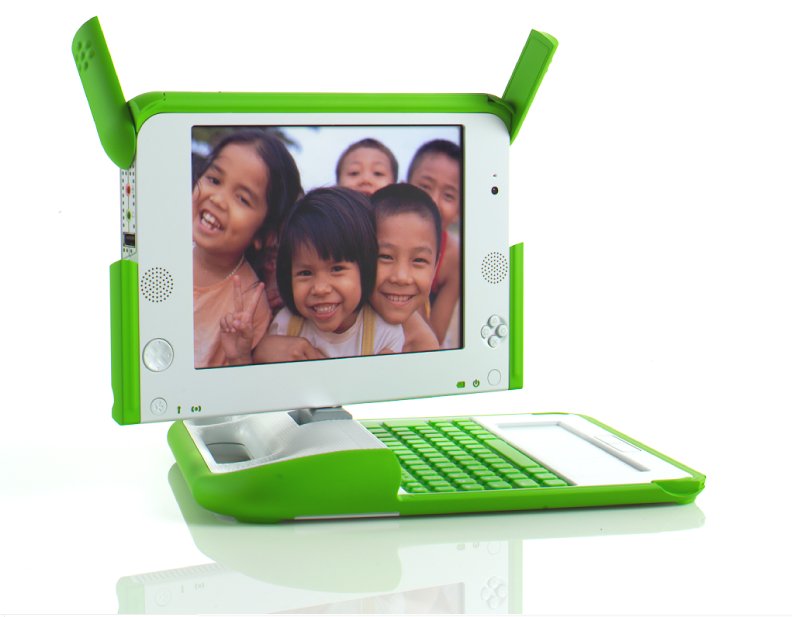
One Laptop Per Child, intended to help bridge the digital divide between rich and poor parts of the world, is soon to release a trial version of a computer developed in collaboration with the Massachusetts Institute of Technology (MIT).

It is expected to go into production in the first quarter of the new year and sold for a little over $100 a piece. It is to be shipped with a tailored version of Red Hat Linux, a free open source system.

Microsoft did not confirm reports that it was paring its operating system for sale on OLPC machines, but said: "We continue to speak with Mr Negroponte (OLPC chairman) about ways that Microsoft can help in the future.

"At Microsoft we have many different solutions designed to meet the needs of people in developing nations, such as programs like Partners in Learning, the Local Language Program, and products like Windows XP Starter Edition, and Microsoft FlexGo. We believe we need many different solutions as an industry to lessen the digital divide for the 90 per cent of the world who don't currently benefit from access to technology," Microsoft said.

One Laptop Per Child president and co-founder of the MIT media lab Walter Pender, confirmed he had talked to Microsoft about its plans to port to OLPC machines.

"They said, 'we want to get windows on your machine, will you send us one'. We said, 'sure'," he said.

"We are working with Red Hat to develop an environment and at the same time Microsoft is working on a port for themselves for the laptop," he said.

"That's not what we're doing. What we are doing is a Linux distribution - open source. What Microsoft are doing is a port of Windows. We'll work with anyone who wants to port their software to our machine," he added.

The significance of Microsoft's plans was noted by the UK's Green Party this week when Siân Berry, its principal speaker, said in a statement that it was an act of "unacceptable bribery".

"Open Source tools are a way to let the Global South develop their own knowledge economies. Microsoft want to restrict the greatest profits in the knowledge economy to already established software corporations like them. By installing their programs on these laptops they hope to create market domination and vendor lock in," she said.

Not everyone sees it that way, as Microsoft chairman Bill Gates noted in March when he criticised OLPC for offering a second-rate machine.

Nevertheless, Argentina, Brazil, Libya, Nigeria and Thailand have all expressed an interest in the OLPC machine and none, said Pender, had said no because they wanted beefy machines with Microsoft software.

If Microsoft didn't get its software onto OLPC machines the result might be the opposite of Berry's warning - that is, it could be locked out of prosperous new markets. But this is not a commercial battle, it's a philosophical one.

OLPC is happy to have Microsoft or any other profit-making firm sell software for its machines. What is more important to it, however, is that it provides a means for less developed countries to avoid getting locked into technology that, it is argued, might restrict their creative and commercial freedoms.

"Having a machine as closed as the ones Microsoft has been advocating forever would be antithetical to a lot of the goals of OLPC - which are openness and freedom for users," said Benjamin Mako Hill, an MIT propellerhead who worked on the OLPC software.

An open source system, the theory goes, would empower those communities that used it by removing the need to be tied into a commercial software sales model. Hence, it would shift the power to those places by giving them the means to create, modify, and repair their own software, encouraging the development of local expertise.

Clearly, not everyone who uses an open source computer is interested in learning how to fiddle with the software code that makes it operate. But Hill envisages a network of local experts, perhaps independently certified, who could provide the technical means to settle the open source computers into a society.

The alternative could constrict the development of local skill, commerce and intellectual property, the open sourcers argue.

It is a question of whether the development of IT in African markets will be branded Microsoft or will progress independently, according to its own nature. ®

Source: The Register
Also See: $100 laptop project launches 2007
Also see: One Laptop Per Child + Video Prototype

$100 laptop project launches 2007

The first batch of computers built for the One Laptop Per Child project could reach users by July this year.

The scheme is hoping to put low-cost computers into the hands of people in developing countries.

Ultimately the project's backers hope the machines could sell for as little as $100 (£55).

The first countries to sign up to buying the machine include Brazil, Argentina, Uruguay, Nigeria, Libya, Pakistan and Thailand.

The so-called XO machine is being pioneered by Nicholas Negroponte, who launched the project at the Massachusetts Institute of Technology's Media Lab in 2004.

Test machines are expected to reach children in February as the project builds towards a more formal launch.

Wireless networking

Mr Negroponte told the Associated Press news agency that three more African countries might sign on in the next two weeks.

The laptop is powered by a 366-megahertz processor from Advanced Micro Devices and has built-in wireless networking.

It has no hard disk drive and instead uses 512 MB of flash memory, and has two USB ports to which more storage could be attached.

"I have to laugh when people refer to XO as a weak or crippled machine and how kids should get a "real' one"," Mr Negroponte told AP.

"Trust me, I will give up my real one very soon and use only XO. It will be far better, in many new and important ways."

The computer runs on a cut-down version of the open source Linux operating system and has been designed to work differently to a Microsoft Windows or Apple machine from a usability perspective.

Instead of information being stored along the organising principle of folders and a desktop, users of the XO machine are encouraged to work on an electronic journal, a log of everything the user has done on the laptop.

The machine comes with a web browser, word processor and RSS reader, for accessing the web feeds that so many sites now offer.

"In fact, one of the saddest but most common conditions in elementary school computer labs (when they exist in the developing world), is the children are being trained to use Word, Excel and PowerPoint," Mr Negroponte said.

"I consider that criminal, because children should be making things, communicating, exploring, sharing, not running office automation tools."

The new user interface, known as Sugar, has been praised by some of the observers of the One Laptop Per Child project.

It doesn't feel like Linux. It doesn't feel like Windows. It doesn't feel like Apple," said Wayan Vota, who launched the OLPCNews.com blog and is also director of Geekcorps, an organisation that facilitates technology volunteers in developing countries.

"I'm just impressed they built a new (user interface) that is different and hopefully better than anything we have today," he said.

But he added: "Granted, I'm not a child. I don't know if it's going to be intuitive to children."

Trial versions of the operating system in development can be downloaded to be tested out by technically-minded computer users around the world.

Source: BBC

Also see: One Laptop Per Child + Video Prototype

Tuesday, January 02, 2007

ADD: Does It Really Exist?

Above New City School students "learning to living".

Several years ago I worked for an organization that assisted teachers in using the arts in their classrooms. We were located in a large warehouse in Cambridge, Massachusetts, and several children from the surrounding lower-working-class neighborhood volunteered to help with routine jobs. I recall one child, Eddie, a 9-year-old African American youngster possessed of great vitality and energy, who was particularly valuable in helping out with many tasks. These jobs included going around the city with an adult supervisor, finding recycled materials that could be used by teachers in developing arts programs, and then organizing them and even field-testing them back at the headquarters. In the context of this arts organization, Eddie was a definite asset.

A few months after this experience, I became involved in a special program through Lesley College in Cambridge, where I was getting my master's degree in special education. This project involved studying special education programs designed to help students who were having problems learning or behaving in regular classrooms in several Boston-area school districts. During one visit to a Cambridge resource room, I unexpectedly ran into Eddie. Eddie was a real problem in this classroom. He couldn't stay in his seat, wandered around the room, talked out of turn, and basically made the teacher's life miserable. Eddie seemed like a fish out of water. In the context of this school's special education program, Eddie was anything but an asset. In retrospect, he appeared to fit the definition of a child with attention deficit disorder (ADD).

Over the past 15 years, ADD has grown from a malady known only to a few cognitive researchers and special educators into a national phenomenon. Books on the subject have flooded the marketplace, as have special assessments, learning programs, residential schools, parent advocacy groups, clinical services, and medications to treat the "disorder." (The production of Ritalin or methylphenidate hydrochloride -- the most common medication used to treat ADD -- has increased 450% in the past four years, according to the Drug Enforcement Agency.) The disorder has solid support as a discrete medical problem from the Department of Education, the American Psychiatric Association, and many other agencies.

I'm troubled by the speed with which both the public and the professional community have embraced ADD. Thinking back to my experience with Eddie and the disparity that existed between Eddie in the arts organization and Eddie in the special education classroom, I wonder whether this "disorder" really exists in the child at all, or whether, more properly, it exists in the relationships that are present between the child and his or her environment. Unlike other medical disorders, such as diabetes or pneumonia, this is a disorder that pops up in one setting only to disappear in another. A physician mother of a child labeled ADD wrote to me not long ago about her frustration with this protean diagnosis: "I began pointing out to people that my child is capable of long periods of concentration when he is watching his favorite sci-fi video or examining the inner workings of a pin-tumbler lock. I notice that the next year's definition states that some kids with ADD are capable of normal attention in certain specific circumstances. Poof. A few thousand more kids instantly fall into the definition."

There is in fact substantial evidence to suggest that children labeled ADD do not show symptoms of this disorder in several different real-life contexts. First, up to 80% of them don't appear to be ADD when in the physician's office. They also seem to behave normally in other unfamiliar settings where there is a one-to-one interaction with an adult (and this is especially true when the adult happens to be their father). Second, they appear to be indistinguishable from so-called normals when they are in classrooms or other learning environments where children can choose their own learning activities and pace themselves through those experiences. Third, they seem to perform quite normally when they are paid to do specific activities designed to assess attention. Fourth, and perhaps most significant, children labeled ADD behave and attend quite normally when they are involved in activities that interest them, that are novel in some way, or that involve high levels of stimulation. Finally, as many as 70% of these children reach adulthood only to discover that the ADD has apparently just gone away.

It's understandable, then, that prevalence figures for ADD vary widely -- far more widely than the 3% to 5% figure that popular books and articles use as a standard. As Russell Barkley points out in his classic work on attention deficits, Attention Deficit Hyperactivity Disorder: A Handbook for Diagnosis and Treatment, the 3% to 5% figure "hinges on how one chooses to define ADHD, the population studied, the geographic locale of the survey, and even the degree of agreement required among parents, teachers and professionals.... Estimates vary between 10% and 20%." In fact, estimates fluctuate even more than Barkley suggests. In one epidemiological survey conducted in England, only two children out of 2,199 were diagnosed as hyperactive (.09%)." Conversely, in Israel, 28% of children were rated by teachers as hyperactive." And in an earlier study conducted in the U.S., teachers rated 49.7% of boys as restless, 43.5% of boys as having a "short attention span," and 43.5 % of boys as "inattentive to what others say."

The Rating Game

These wildly divergent statistics call into question the assessments used to decide who is diagnosed as having ADD and who is not. Among the most frequently used tools for this purpose are behavior rating scales. These are typically checklists consisting of items that relate to the child's attention and behavior at home or at school. In one widely used assessment, teachers are asked to rate the child on a scale from I (almost never) to 5 (almost always) with regard to behavioral statements such as: "Fidgety (hands always busy)," "Restless (squirms in seat)," and "Follows a sequence of instructions." The problem with these scales is that they depend on subjective judgments by teachers and parents who may have a deep, and often subconscious, emotional investment in the outcome. After all, a diagnosis of ADD may lead to medication to keep a child compliant at home or may result in special education placement in the school to relieve a regular classroom teacher of having to teach a troublesome child.

Moreover, since these behavior rating scales depend on opinion rather than fact, there are no objective criteria through which to decide how much a child is demonstrating symptoms of ADD. What is the difference in terms of hard data, for example, between a child who scores a 5 on being fidgety and a child who scores a 4? Do the scores mean that the first child is one point more fidgety than the second? Of course not. The idea of assigning a number to a behavior trait raises the additional problem, addressed above, of context. The child may be a 5 on "fidgetiness" in some contexts (during worksheet time, for example) and a 1 at other times (during recess, during motivating activities, and at other highly stimulating times of the day). Who is to decide what the final number should be based on? If a teacher places more importance on workbook learning than on hands-on activities, such as building with blocks, the rating may be biased toward academic tasks, yet such an assessment would hardly paint an accurate picture of the child's total experience in school, let alone in life.

It's not surprising, then, to discover that there is often disagreement among parents, teachers, and professionals using these behavior rating scales as to who exactly is hyperactive or ADD. In one study, parent, teacher, and physician groups were asked to identify hyperactive children in a sample of 5,000 elementary school children. Approximately 5% were considered hyperactive by at least one of the groups, while only 1% were considered hyperactive by all three groups." In another study using a well-known behavior rating scale, mothers and fathers agreed that their children were hyperactive only about 32% of the time, and the correspondence between parent and teacher ratings was even worse: they agreed only about 13% of the time."

These behavior rating scales implicitly ask parents and teachers to compare a potential ADD child's attention and behavior to those of a "normal" child. But this raises the question, What is normal behavior? Do normal children fidget? Of course they do. Do normal children have trouble paying attention? Yes, under certain circumstances. Then exactly when does normal fidgeting turn into ADD fidgeting, and when does normal difficulty paying attention become ADD difficulty?

These questions have not been adequately addressed by professionals in the field, yet they remain pressing issues that seriously undermine the legitimacy of these behavior rating scales. Curiously, with all the focus being placed on children who score at the high end of the hyperactivity and distractibility continuum, virtually no one in the field talks about children who must statistically exist at the opposite end of the spectrum: children who are too focused, too compliant, too still, or too hypoactive. Why don't we have special classes, medications, and treatments for these children as well?

A Brave New World of Soulless Tests

Another ADD diagnostic tool is a test that assigns children special "continuous performance tasks" (CPTs). These tasks usually involve repetitious actions that require the examinee to remain alert and attentive throughout the test. The earliest versions of these tasks were developed to select candidates for radar operations during World War II. Their use with children in today's world is highly questionable. One of the most popular of the current CPT instruments is the Gordon Diagnostic System (GDS). This Orwellian device consists of a plastic box with a large button on the front and an electronic display above it that flashes a series of random digits. The child is told to press the button every time a "1" is followed by a "9." The box then records the number of "hits" and "misses" made by the child. More complex versions involving multiple digits are used with older children and adults.

Quite apart from the fact that this task bears no resemblance to anything else that children will ever do in their lives, the GDS creates an "objective" score that is taken as an important measure of a child's ability to attend. In reality, it tells us only how a child will perform when attending to a repetitive series of meaningless numbers on a soulless task. Yet ADD expert Russell Barkley writes, "[the GDS] is the only CPT that has enough available evidence ... to be adopted for clinical practice." As a result, the GDS is used not only to diagnose ADD but also to determine and adjust medication doses in children with the label.

There is a broader difficulty with the use of any standardized assessment to identify children as having ADD. Most of the tests used (including behavior rating scales and continuous performance tasks) have attempted to be validated as indicators of ADD through a process that involves testing groups of children who have previously been labeled ADD and comparing their test results with those of groups of children who have been judged to be "normal." If the assessment shows that it can discriminate between these two groups to a significant degree, it is then touted as a valid indicator of ADD. However, one must ask how the initial group of ADD children originally came to be identified as ADD. The answer would have to be through an earlier test. And how do we know that the earlier test was a valid indicator of ADD? Because it was validated using two groups: ADD and normal. How do we know that this group of ADD children was in fact ADD? Through an even earlier test ... and so on, ad infinitum. There is no Prime Mover in this chain of tests; no First Test for ADD that has been declared self-referential and infallible. Consequently, the validity of these tests must always remain in doubt.

In Search of a Deficit

Even if we admit that such tests could tell the difference between children labeled ADD and "normal" children, recent evidence suggests that there really aren't any significant differences between these two groups.

Researchers at the Hospital for Sick Children in Toronto, for example, discovered that the performance of children who had been labeled ADD did not deteriorate over time on a continuous performance task any more than did that of a group of so-called normal children. They concluded that these "ADD children" did not appear to have a unique sustained attention deficit.

In another study, conducted at the University of Groningen in the Netherlands, children were presented with irrelevant information on a task to see if they would become distracted from their central focus, which involved identifying groups of dots (focusing on groups of four dots and ignoring groups of three or five dots) on a piece of paper. So-called hyperactive children did not become distracted any more than so-called normal children, leading the researchers to conclude that there did not seem to be a focused attention deficit in these children." Other studies have suggested that "ADD children" don't appear to have problems with short-term memory or with other factors that are important in paying attention." Where, then, is the attention deficit?

A Model of Machines and Disease

The ADD myth is essentially a paradigm or world view that has certain assumptions about human beings at its core. Unfortunately, the beliefs about human capacity addressed in the ADD paradigm are not terribly positive ones. It appears as if the ADD myth tacitly endorses the view that human beings function very much like machines. From this perspective, ADD represents something very much like a mechanical breakdown. This underlying belief shows up most clearly in the kinds of explanations that parents, teachers, and professionals give to children labeled ADD about their problems. In one book for children titled Otto Learns About His Medicine, a red car named Otto goes to a mechanic after experiencing difficulties in car school. The mechanic says to Otto, "Your motor does go too fast," and he recommends a special car medicine .

While attending a national conference on ADD, I heard experts share similar ways of explaining ADD to children, including comparisons to planes ("Your mind is like a big jet plane ... you're having trouble in the cockpit), a car radio ("You have trouble filtering out noise"), and television ("You're experiencing difficulty with the channel selector"). These simplistic metaphors seem to imply that human beings really aren't very complex organisms and that one simply needs to find the right wrench, use the proper gas, or tinker with the appropriate circuit box -- and all will be well. They are also just a short hop away from more insulting mechanical metaphors ("Your elevator doesn't go all the way to the top floor").

The other feature that strikes me as being at the heart of the ADD myth is the focus on disease and disability. I was particularly struck by this mindset while attending a workshop with a leading authority on ADD who started out his lecture by saying that he would treat ADD as a medical disorder with its own etiology (causes), pathogenesis (development), clinical features (symptoms), and epidemiology (prevalence). Proponents of this view talk about the fact that there is "no cure" for ADD and that parents need to go through a "grieving process" once they receive a "diagnosis". ADD guru Russell Barkley commented in a recent address: "Although these children do not look physically disabled, they are neurologically handicapped nonetheless.... Remember, this is a disabled child." Absent from this perspective is any mention of a child's potential or other manifestations of health -- traits that are crucial in helping a child achieve success in life. In fact, the literature on the strengths, talents, and abilities of children labeled ADD is almost nonexistent.

In Search of the ADD Brain

Naturally, in order to make the claim that ADD is a disease, there must be a medical or biological cause for it. Yet, as with everything else about ADD, no one is exactly sure what causes it. Possible biological causes that have been proposed include genetic factors, biochemical abnormalities (imbalances of such brain chemicals as serotonin, dopamine, and norepinephrine), neurological damage, lead poisoning, thyroid problems, prenatal exposure to various chemical agents, and delayed myelinization of the "nerve pathways in the brain."
In its search for a physical cause, the ADD movement reached a milestone with the 1990 publication in the New England Journal of Medicine of a study by Alan Zametkin and his colleagues at the National Institute of Mental Health. This study appeared to link hyperactivity in adults with reduced metabolism of glucose (a prime energy source) in the premotor cortex and the superior prefrontal cortex -- areas of the brain that are involved in the control of attention, planning, and motor activity. In other words, these areas of the brain were not working as hard as they should have been, according to Zametkin.

The media picked up on Zarmetkin's research and reported it nationally. ADD proponents latched on to this study as "proof" of the medical basis for ADD. Pictures depicting the spread of glucose through a "normal" brain compared to a "hyperactive" brain began showing up in CH.A.D.D. (Children and Adults with Attention Deficit Disorder) literature and at the organization's conventions and meetings. One ADD advocate seemed to speak for many in the ADD movement when she wrote: "In November 1990, parents of children with ADD heaved a collective sigh of relief when Dr. Alan Zametkin released a report that hyperactivity (which is closely linked to ADD) results from an insufficient rate of glucose metabolism in the brain. Finally, commented a supporter, we have an answer to skeptics who pass this off as bratty behavior caused by poor parenting."

What was not reported by the media or cheered by the ADD community was the study by Zametkin and others that came out three years later in the Archives of General Psychiatry. In an attempt to repeat the 1990 study with adolescents, the researchers found no significant differences between the brains of so-called hyperactive subjects and those of so-called normal subjects. And in retrospect, the results of the first study didn't look so good either. When the original 1990 study was controlled for sex (there were more men in the hyperactive group than in the control group), there was no significant difference between groups.

A recent critique of Zametkin's research by faculty members at the University of Nebraska also pointed out that the study did not make clear whether the lower glucose rates found in "hyperactive brains" were a cause or a result of attention problems. The critics pointed out that, if subjects were startled and then had their levels of adrenalin monitored, adrenalin levels would probably be quite high. We would not say, however, that these individuals had an adrenalin disorder. Rather, we'd look at the underlying conditions that led to abnormal adrenalin levels. Similarly, even if biochemical differences did exist in the so-called hyperactive brain, we ought to be looking at the nonbiological factors that could account for some of these differences, including stress, learning style, and temperament.

The Stigma of ADD

Unfortunately, there seems to be little desire in the professional community to engage in dialogue about the reality of attention deficit disorder; its presence on the American educational scene seems to be a fait accompli. This is regrettable, since ADD is a psychiatric disorder, and millions of children and adults run the risk of stigmatization from the application of this label.

In 1991, when such major educational organizations as the National Education Association (NEA), the National Association of School Psychologists (NASP), and the National Association for the Advancement of Colored People (NAACP) successfully opposed the authorization by Congress of ADD as a legally handicapping condition, NEA spokesperson Debra DeLee wrote, "Establishing a new category [ADD] based on behavioral characteristics alone, such as overactivity, impulsiveness, and inattentiveness, increases the likelihood of inappropriate labeling for racial, ethnic, and linguistic minority students." And Peg Dawson, former NASP president, pointed out,

"We don't think that a proliferation of labels is the best way to address the ADD issue. It's in the best interest of all children that we stop creating categories of exclusion and start responding to the needs of individual children."

ADD nevertheless continues to gain ground as the label du jour in American education. It's time to stop and take stock of this "disorder" and decide whether it really exists or is instead more a manifestation of society's need to have such a disorder.

By Thomas Armstrong, Ph.D.

Source: Natural Childhood Project

Also see: New City School

New City School


Multiple Intelligences as a tool for teaching and learning

Since 1988, the theory of Multiple Intelligences, conceived
by Harvard University Professor Howard Gardner, has been
used as a tool for teaching and learning at New City School.


This unique academic learning approach capitalizes on
students’ strengths and creates a deep level of understanding
that allows children to use what they’ve learned in new and
different situations.


New City School teachers create opportunities for children
to learn and express what is learned through eight different
intelligences: linguistic, logical-mathematical, interpersonal,
intrapersonal, bodily-kinesthetic, musical, naturalist,
and spatial.


In combination with New City School’s strong commitment
to teaching students to read, write, and calculate at the highest
levels of proficiency, the Multiple Intelligences approach
to teaching and learning produces graduates who are well
prepared for their future academic endeavors.


In a study of the use of Multiple Intelligences to educate
children, it was found that schools using Multiple
Intelligences,


"commonly had a culture of hard work,
respect, and caring; a faculty that collaborated and
learned from each other; classrooms that engaged"


An Intentional focus on emotional intelligence

Interpersonal and Intrapersonal Skills

Emotional intelligence is learned and reinforced at New City
School through an emphasis on the “personal” intelligences.
The intrapersonal intelligence, the ability to know oneself, and
the interpersonal intelligence, the ability to work well with others,
are a constant focus – both in classroom learning and in assessment.


The first page of New City School’s progress report is focused on
the personal intelligences. Students are given feedback on specific
behaviors under the headings of: Confidence, Motivation, Problem
Solving, Responsibility, Effort and Work Habits, Appreciation
for Diversity, and Teamwork.

The personal intelligences page of the New City School progress
report has been adapted for use in evaluating second year law
students at Washington University, and for personnel evaluation
at a local Fortune 500 company.


New City School home page

New City School Viewbook (PDF)